African-ish
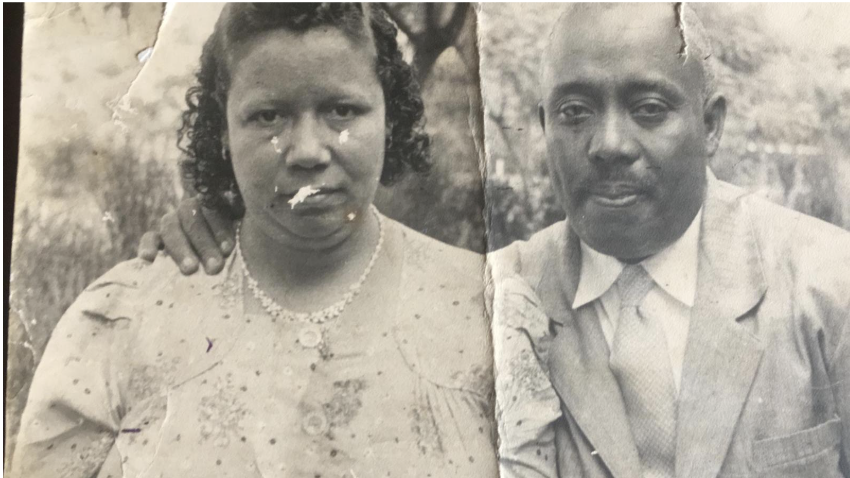
My skin oscillates between cream hues and cafe-o-lait browns depending on the seasons, but I have spent a lifetime trying to justify myself in a world that sees only black and white.
Frustrations arise particularly because I am the product of a dirty history that has stripped me of a self-explanatory color.
And so here is the story:
Savannah Ice:
A Story of the Mixed-Race in the Belgian Congo
Every time I have a rare opportunity to go see my grandfather, I can’t help but to be absorbed by the icy grayness of his eyes. It seems so out of place against the sienna dust that drifts through his home province of Katanga in southeastern Democratic Republic of Congo (DRC). There in his hometown of Lubumbashi, it is a world of savannah browns, yet something in the past has disrupted this delicate balance of maroons. Despite being born on and raised from this sienna earth, my grandfather’s eyes cast an impression of an alien place cold and far away beyond the warm hues of southern Congo.
My grandfather's icy eyes are more reminiscent of the coldness of the Belgian regime that overshadowed Congo from 1908 to 1960. Over the course of these 52 years Congo was a Belgian colony plundered for its natural wealth as the colonial power developed plantations of cotton, oil palms, coffee, and cacao, while they also mined minerals in the interior of the region. Belgian authority did much more than extract resources from this region, it sculpted the livelihoods of the Congolese people based on racial doctrines that enforced white superiority and control. The Belgian colonial social regime centered around a mission of “civilizing” the Congolese people, based on strict ideals that placed black individuals as grossly inferior next to Europeans. The question then arose, what was to be done if these racial boundaries were infringed upon, and the lines became blurred? What became of individuals that shattered this hierarchy by existing as hybrids of these two worlds, the civilized and the uncivilized? My grandfather's alien eyes in a world of savannah heat reflect a long history of Belgian anxieties regarding mixed race Congolese, and in this paper I aim to investigate how Belgian control regarding race and class crafted the social frameworks that led to the mixed race existence my grandfather navigates today.
My grandfather was born in 1947 in Bukama, a small town that sits in the same province of Katanga that he currently lives in now. Even as a small child, his appearance came with a certain sense of alieness. One of the earliest images of him depicts him as a serious-looking two year old sporting a tuft of blonde hair. His expression is solemn, mimicking that of the woman standing next to him holding a babbling baby. The woman is of a light complexion, with well-coiffed smooth black hair and sporting a thin pearl necklace to frame her collared dress. Her name is Dina Pelagie Reima, the babbling baby at her hip is her granddaughter, and my blonde-tufted grandfather is her son. There in Bukama, Dina raised all eleven of her sons and daughters, including my grandfather, but the story of my grandfather’s strange looks originated from far beyond this small town in Southeastern Congo.
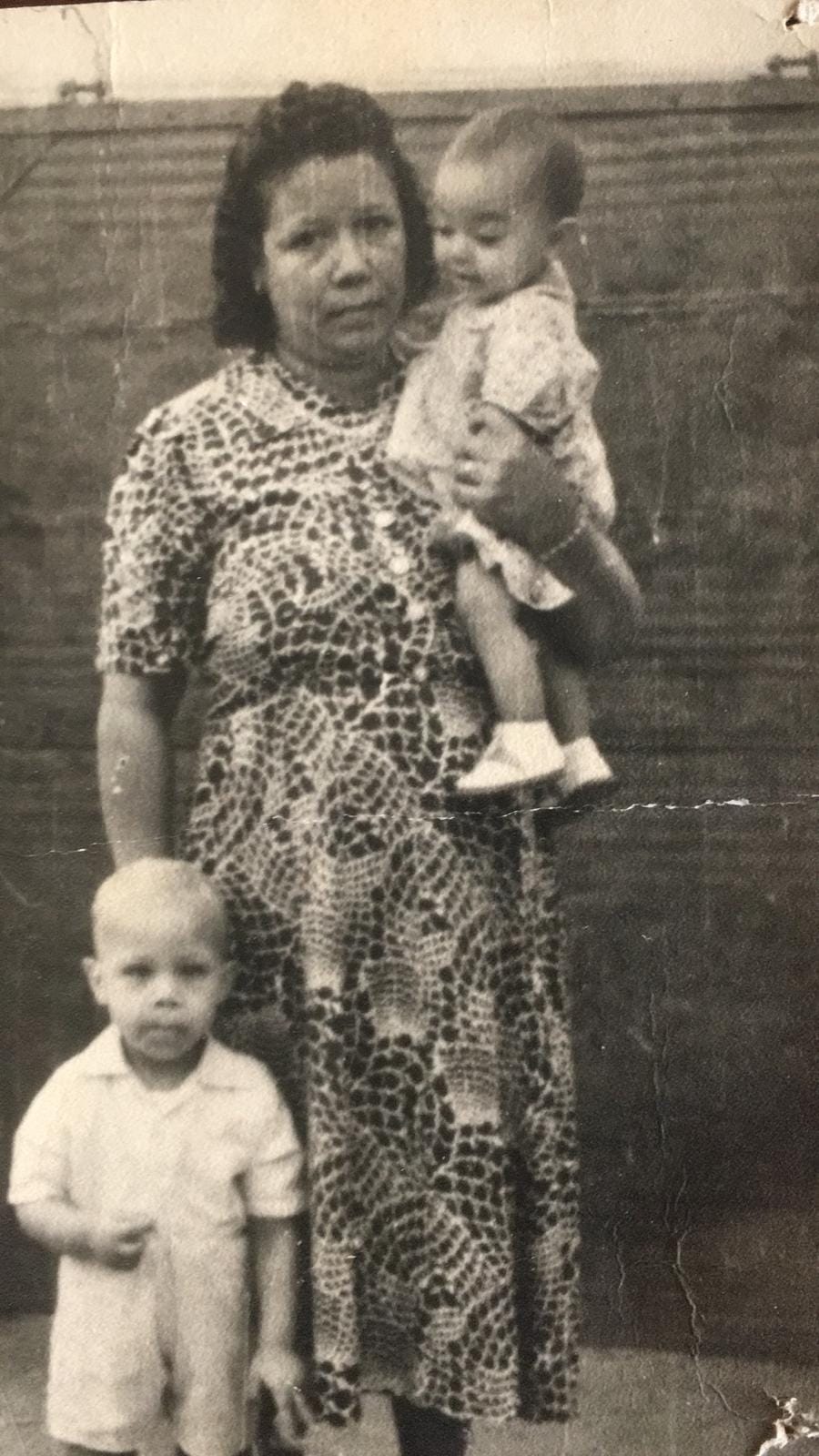
My great-grandmother Dina was not Congolese by ethnicity, instead she was a mix of Zanzibar-Arab and Italian. Her mother, known as Muayuma, was said to come from a long line of Arab slave traders from Zanzibar that migrated to Eastern Congo in the late 1800’s to facilitate their slave businesses. These Arab slave traders were known to “spread a wide swath of terror through much of east and central Africa” and were gravitated to Congo due to an ample supply of ‘merchandise’. Additionally, the discovery of routes along the upper Congo River by European explorers allowed their commerce to expand dramatically. The Congo River, the continent’s second longest river after the Nile, allowed these Arab traders to transport goods across vast swaths of Central Africa and granted them an edge that drew them into the region. The slaves they captured in this region were sold all along the northeast shore of the Indian Ocean and the Persian Gulf . It is said in my family that Muayuma was active in the Congolese slave trade, and known to be fervently racist towards the Congolese, yet for Dina’s father, not much is known beyond his nationality.
Dina was thought to be born around 1904 in the Maniema region of Congo, a province neighboring Katanga to the north, and despite not being ethnically Congolese, she did not escape the racial scrutiny of Congolese Belgian rule. It is important to note that calling Zanzibar-Arabs purely Arab is a misnomer as there “was scarcely an Arab in Zanzibar who did not have some African blood”, but despite in reality being Afro-Arabs, most Europeans classified them as just Arab. Europeans viewed these Arab slave trading activities as “an ideal target for disapproval: one ‘uncivilized’ race enslaving another.” It was the Muslim status of these Arab slave traders that allowed Europeans to feel virtuous about dismantling their operations in Congo as the Belgian regime often won praise over their motivations to ‘christianize’ their colony. One form of this mission to ‘christianize’ included the systematic abduction of children from their maternal families in order to place them in Catholic missions across the country. It is said that Belgian authorities discovered Dina in Maniema, and took her away from her ‘uncivilized’ Arab-Muslim mother and moved her as a young girl to a mission in Kisangani, a city nearly 500 kilometers away from her home area in Maniema. There she was raised to be Catholic with other children that had also been abducted from their families across the country.
A large number of these children were most likely not of Arab descent like Dina was, but instead known as metis, the illegitimate biracial children of Congolese women and colonial officials. Métis children across the country were moved to missions with the goal of obscuring them from the rest of society. Their existence proved that black and white could coexist in some form, and that the boundaries artificially drawn between the two races were far more fluid than perceived. Métis were not only seen as “an aberration but also as a possible danger – as a future force for revolution if they stayed with their African families.”
It is here in the mission, around 1920, when Dina was encouraged to get married. It is rumored that the sisters that ran the church gave the girls photos of men that the the girls would be put in correspondence with via letters in order to wed. Amongst the images, were likely a flurry of young métis men who, like the girls, were raised in isolation away from their African families. What is particularly telling, is that the Belgian racial hierarchy clearly placed mixed race individuals above the wholly black Congolese, as these children were given proper educations in the Catholic missions, including primary education for the girls. They were allotted a rung in society where they were permitted to intermarry and produce children. This philosophy in colonial terms was known as ‘racialization’ where “the metis took up an intermediary position between blacks and whites and needed a special upbringing and education that suited [this] position.” Through this decision in allowing Dina to wed one of these métis men, it seems as though the Afro-Arabs occupied a similar position in Congolese society as mixed race children. Not quite black, yet not quite white, sitting somewhere in some liminal racial space designed to keep these racial outcasts away and in the fringes of Congolese society.
Amongst the images, supposedly Dina chose the darkest of the men because his letters seemed to carry a sense of wit and intelligence that she did not see in any of the other candidates, “despite the availability of lighter men she could’ve chosen from.” This man would turn out to be a métis man by the name of Leon Emille Charlier, who was writing his letters out of Bukama, where he was working for the Katanga Railroad Company (known as the Chemin de Fer Katanga)12. Soon after the decision was made, Dina traveled down to Bukama to live with her newly wed husband, and had her first child at the age of eighteen, and eventually some twenty years later, was pregnant with my grandfather.
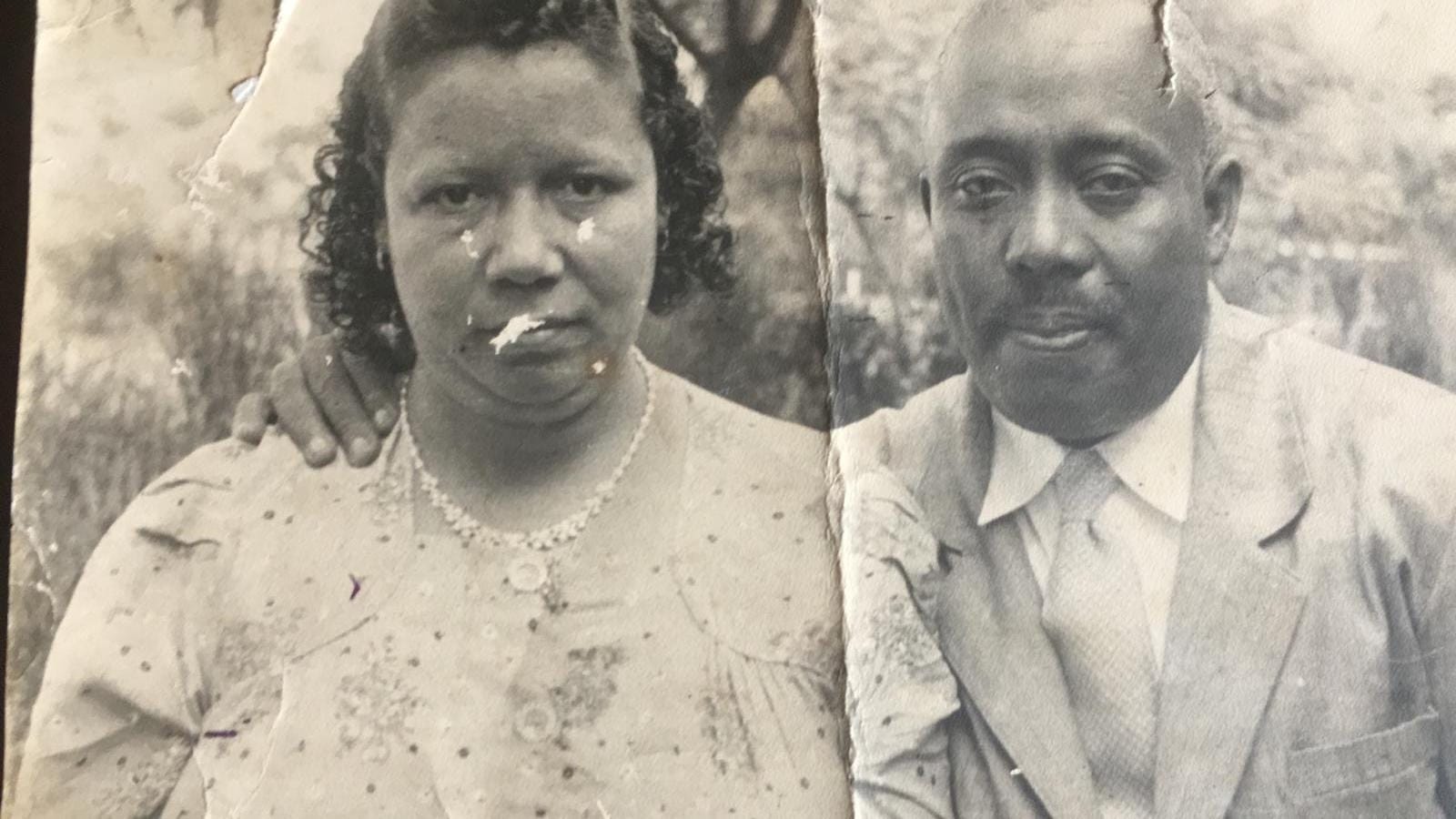
Dina and Leon posing together.
Leon’s legacy in the Katanga Railroad Company carried over from his father, who was a Belgian businessman named Jean Maximilian Charlier who must've voyaged into South Eastern Congo in the early 1890s to begin working with the company, also commonly known as CFK. CFK was established in 1902 with the aim of building the Katanga portion of a national railway to connect the “Katanga copperbelt to the only seaport of Matadi” on the Atlantic coast of the DRC. Early work in the 1890s had already been conducted to connect Matadi to what was Leopoldville at the time, the capital of Belgian Congo, in order to shuttle goods to and from the administrative headquarters of the colony, but it was upon the discovery of the mineral richness of Katanga that a railroad building frenzy drew in more Belgian workers into the southern part of the nation. Up to 200 million francs were spent in the early 1920’s in order to develop the southern portion of this rail line to facilitate the shuttling of copper and other minerals across the country. It is in the light of this railroad frenzy that Jean Maximilian Charlier likely left Belgium to seek opportunities in the heart of the Southern Congo savannah.
While it is not clear what role Jean had in CFK, it is true that his position as a Belgian authority in the company granted his son Leon many advantages in his later life. Leon was given one of the best educations present in the country at the time for metis children through the influence of his father, who purposely placed his son in a Catholic mission known for its high quality education for metis boys in Kisangani, some 1100 km away from Leon’s town of birth in Bukama. Unlike many metis who were forcibly placed in the missions, Leon’s father had been active in this decision, likely knowing that it would be advantageous for his son later in life. This occurrence of Belgian colonial authorities recognizing their metis children was known to be very rare, as most metis children were not recognised by their white fathers and often not even their Congolese mothers due to early alienation and the common practice of omitting both parents' names in the children’s registration. The Belgian regime wanted to actively obscure these metis children from society. Instead, Leon seemed to fit a particular niche of Congolese society, coined by the Belgians as “les évolués”, a term used to indicate what the Belgians deemed the ‘evolved’ status of a particular subset of Congolese that were deemed to have progressed further into the realm of civilization. There was no “universally accepted criteria for becoming an ‘évolué’ but it generally was associated with a good knowledge of French, adherence to Christianity and some post primary education.” Being “évolué” became synonymous for being part of a minority African elite that were granted particular privileges including access to skilled jobs such as nursing or bookkeeping. While it was possible to become an “évolué” as a fully Congolese individual, the privileges Leon's father granted him catapulted him into this rung of elite African society, allowing him to take over his fathers role at CFK, and eventually becoming a wealthy entrepreneur who owned multiple businesses.
Although Leon carried much privilege in his life from the inherited benefits of his Belgian father, he was created out of an illegitimate union with a Congolese concubine named Kanga, a woman from Lubunda, Maniema chosen by Jean Charlier in order to accompany him during his railroad work trips. This practice of concubinage in the Belgian Congo was not uncommon, and often men that were already married took on concubines as an additional lover, “often with the understanding that the arrangement would only last a matter of months or years.”As for Kanga’s case, her family had too many daughters, and were desperate to sell her off in order to make ends meet, eventually landing her in Jean’s hands. Despite the commonality of this practice in the colony, colonial officials found themselves under heavy scrutiny upon return to Belgium. It was not uncommon for men engaging in interracial relations to be prosecuted. The Belgian regime was not only anxious about the threat that concubinage between government officers and African women could represent for white prestige and racial boundaries, but were also concerned about its negative impact on the credibility of European men as agents of the ‘civilizing mission.’
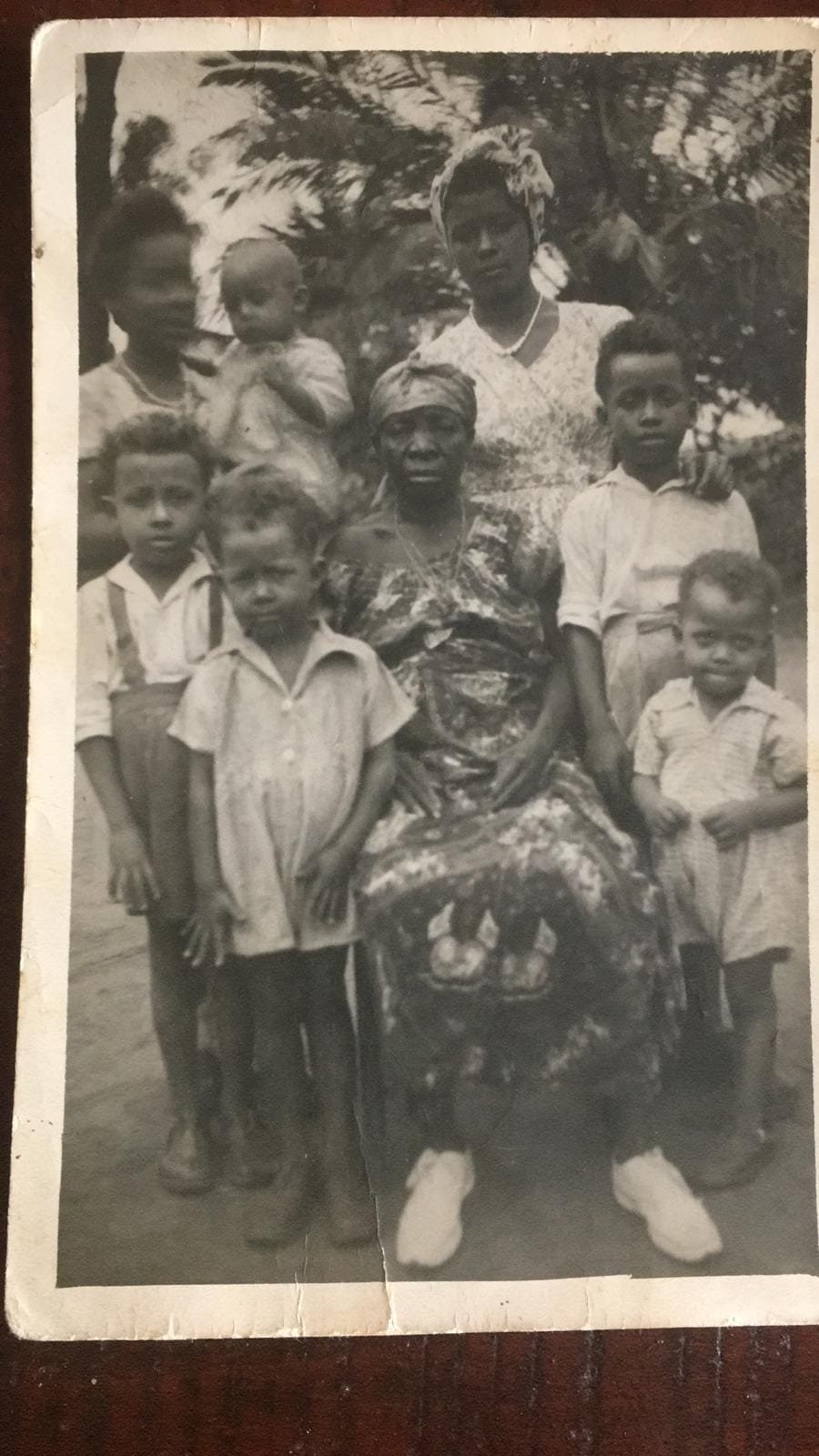
Kanga is surrounded by 7 of her 11 grandchildren. My grandfather is not present in this image
In order to combat these illicit relationships, strict racial segregation was enforced, to the point that even if both parties were willing, a marriage could never be legally recognized because of such laws. The impact of these laws were most vividly seen in Congolese urban areas at night, where Europeans were not allowed to be seen in African-segregated spaces and vice-versa. Potential echoes of these restrictions circulate in my family in the form of stories of Kanga and Jean Charlier, describing how Charlier would haul Kanga in a barrel, declaring It was his finest wine shipment from Europe. It was in this manner they were said to secretly travel around the country. It would not be a far stretch to assume that many colonial men who took on concubines had to devise strategies to continue their relationships under the shadow of Belgian probing. These stories emphasize the hypocrisy that often followed these colonial regimes, where they often publicly attempted to curb certain practices, but in secret, most authorities knew it was commonplace or even partook in it themselves. The topic of race often became a battleground regarding morality yet it also lent itself as a gray-zone where many colonial men in the colonies seemed to grant themselves moral passes to bypass the rules that were set in place by their homelands.
Eventually when my grandfather was born in 1947, the nature of Kanga’s relationship with Jean was not a family guarded secret. It was widely accepted in the family that Kanga became the widow of an illegitimate union at some point during Leon’s time at the mission in Kisangani, when Jean passed away in a railroad explosion accident. Her status as a concubine also generated some intrafamilial tension, as Dina’s mother, Muayuma considered Kanga equivalent to the slaves she regarded as ‘merchandise’ in her milieu of Arab traders. As a result of this, Dina purposely estranged herself from her mother to avoid the disapproval of marrying a half-Congolese-concubine man, and thus my grandfather never came to know his maternal grandmother.
Despite the complex family dynamics, it is apparent that Jean’s legacy of Belgian privilege trickled through to my grandfather. Through the resources and education that was granted to Leon, my grandfather inherited many of his father’s enterprises, including a large farm in Eastern Congo near Goma. My grandfather was also given a high quality education in Congo, but it was not effortless to access the opportunities of some of the best schools in the nation. Jean’s legacy of whiteness could not protect my grandfather from all of the disparities in Belgian imposed Congolese society. In order to attend the high quality schools in the nation, which were European and all white, Leon likely had to leverage his wealth and power in order to convince the schools to allow his metis children into their institutions. And while Leon was successful in granting his children a top class Congolese education due to the inherited privilege he had, to this day my grandfather still recounts some of the unfair treatment he experienced at the hands of teachers and peers. He often recalls how he and his siblings were the most beaten by teachers of all of the children in the classroom, claiming that they were the easy scapegoats for any classroom problem. While my grandfather eventually became a successful veterinarian in upper class Congolese society, it is clear that he still harbors haunting echoes of those primary school experiences.
My grandfather stands as an end product of the Belgian “obsession of race and class in [their] ‘model colony’, combined with the interventions’ of a colonial power operating in close association with the Catholic Church.” The many missions harboring metis children acted in a twofold manner, one as a veil, separating mixed-race children from the rest of society as they posed a threat to the Belgian vision of Congo, but also as a window of opportunity for metis children to gain higher education and enter upper levels of Congolese society. While this division of society came at a great cost for many including the children who were raised far beyond the shelter of their biological families, estranged from their cultural and familial roots, it also came with an array of benefits for some, like my great-grandfather Leon who inherited the wealth of a railroad empire from the hands of his Belgian father. This legacy has undeniably impacted my family today through the opportunities that were then carried down to my grandfather. Upon looking back, it becomes clearer how these alien icy eyes seem to appear in my family, potentially emerging some hundred years ago when a Belgian businessman named Jean Maximilian Charlier stepped onto the savannahs of Katanga in Southeastern Congo for the first time, changing the way my family would navigate this racial landscape for decades to come.
References
Britannica. “Belgian Congo | History & Facts.” Britannica. https://www.britannica.com/place/Belgian-Congo. (2024)
Britannica. “Congo River | Africa's 2nd Longest River, Wildlife & History.” Britannica. https://www.britannica.com/place/Congo-River. (2024)
Ekin, Annette. “The children colonial Belgium stole from African mothers.” Al Jazeera. https://www.aljazeera.com/features/2021/2/3/the-children-colonial-belgium-stole-from-africa. (2021)
Franck, Louis. “Recent developments in the Belgian Congo.” Journal of the Royal Society of Arts 72, no.3745, (1924): 712. https://www.jstor.org/stable/41356728?seq=2.
Gibbs, David N. The Political Economy of Third World Intervention: Mines, Money, and U.S. Policy in the Congo Crisis. N.p.: University of Chicago Press. (1991)
Hochschild, Adam. 2006. King Leopold's Ghost: A Story of Greed, Terror, and Heroism in Colonial Africa, (Boston: Houghton Mifflin, 1998)
Hooste, Emma V. “Metis in the Belgian Congo.” Dissertation. https://doi.org/10.1080/13696815.2023.2262936. (2020)
Lauro, Amandine. The Routledge Companion to Sexuality and Colonialism. Edited by Dagmar Herzog and Chelsea Schields. Routledge, Taylor & Francis Group. (2021)
Nzally, Jimmy H. “Decolonisation Discourse: Perspective on Afro-Belgians.” iDiaspora, no. 22 (2023), 12.
Standifer, Lauren M. Women’s Precarity in the Late Colonial and Postcolonial Congo. Emory University. (2017)
Yelengi, Nkasa. “Labor policies and Household Economic Strategies among the Railway Workers in Katanga, Belgian Congo 1928-1960.” Africa: Rivista trimestrale di studi e documentazione dell'Istituto italiano per l'Africa e l'Oriente 55 (4): 463. https://www.jstor.org/stable/40761478. (2000)